Your First Good Day of Coastal Fishing
A dock-to-cleanup field guide to choosing a spot, packing a small tackle kit, making a safe cast, landing fish cleanly, and learning from the water.
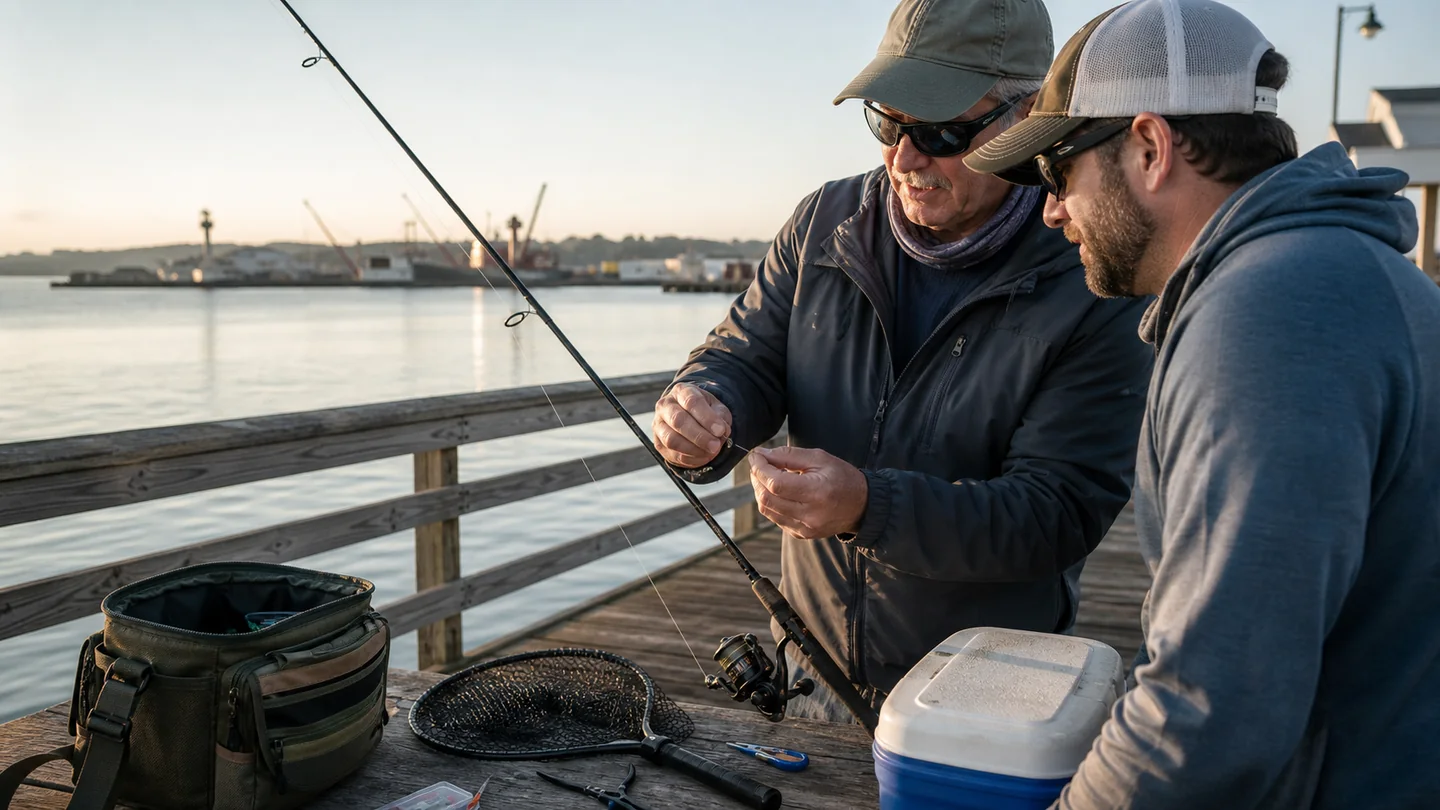
Pack With A Reason
Equipment That Earns Its Place
Learn In Order
Five Skills Worth Practicing
- 1
Tie one dependable connection
Tie it five times at home, trim it, and pull firmly. A clean repeatable knot beats a menu of half-remembered knots.
- 2
Cast on dry ground
Use a practice plug in an open area until the release is predictable. At the water, check behind and beside you before every cast.
- 3
Feel bottom and current
Make short casts first. Notice whether the sinker holds, rolls, snags, or returns covered in weed before reaching for more weight.
- 4
Land without rushing
Keep the rod loaded, guide the fish toward the waiting net, and have the pliers ready before lifting it from the water.
- 5
Keep a two-line log
Record tide stage, wind, water clarity, rig, and what happened. After a few trips, the notes are more useful than vague memory.
Pick a place where learning is easy
A public pier or a broad, gently sloping beach is easier to learn than a wave-washed jetty. Look for legal access, room behind the casting position, a railing or edge you can manage, and a believable way to land a fish. On rock, the route back matters as much as the route in; rising water can erase a dry ledge long before the forecast high tide.
Read the official state rules before choosing tackle. Saltwater boundaries, marine zones, seasonal closures, protected species, barbless-hook rules, and size limits can change the gear decision. NOAA maintains links to state recreational fishing agencies, but the state or federal regulator for the exact water is the final source.
Bring one working system, not ten possibilities
Debbie Hanson's beginner inshore list for Take Me Fishing is deliberately ordinary: a matched rod and reel, suitable line and leader, a modest selection of hooks, weights and lures, plus pliers and a net. That is enough to learn. The missing piece is local fit. Pier pilings, surf current, open sand, and oyster bottom punish different choices, so buy or borrow after asking what works at the actual site.
Lay the kit out the night before in the order it will be used. Rigged rod, spare leader, cutter, pliers, measuring tool, regulations, and landing net should all be reachable without opening three boxes. Add a small bag for clipped line and damaged soft plastic; NOAA's Marine Debris Program specifically asks anglers to keep line and gear out of the water.
Spend ten minutes watching before the first cast
Notice where current seams meet quieter water, where birds repeatedly work, whether bait flickers at the surface, and where other lines are entering the water. In surf, darker gaps and smoother channels can mark deeper cuts, but they can also align with rip currents. Read the beach from a safe position and never treat a promising-looking channel as permission to wade farther.
Tide height and current are separate questions. A water-level prediction helps with access; it does not tell you the exact horizontal current at an inlet. Wind can also bow line, push floating weed, and make a light lure impossible to control. Start close, learn what the rig is doing, then add distance only when distance solves a real problem.
Casting etiquette is part of the skill
Look behind you, announce the cast if someone is approaching, and wait for a clear lane. On a crowded pier, match the general direction of nearby lines and ask before crossing a neighbor's water. A short controlled cast that stays in its lane catches more goodwill—and often more fish—than a wild attempt at maximum distance.
Take Me Fishing recommends learning the basic motion away from the water. A practice plug reveals timing without a hook, bait, railing, or audience. Once the lure lands, close the bail by hand on a spinning reel and take up slack deliberately. That small habit reduces loose coils and makes the next cast less eventful.
Decide how the fish will leave the water before it bites
High pier decks and steep banks require a landing net or another lawful, fish-safe method; lifting a fish by line risks tackle failure and injury. Keep fingers away from the hook path, control species with spines or teeth using appropriate tools, and do not place a fish on hot, dry concrete for a photograph.
NOAA Fisheries recommends reducing fight time, using tackle appropriate to the target, keeping fish in the water when possible, preparing tools in advance, and minimizing air exposure. If the fish is deeply hooked or the hook cannot be removed quickly, follow the agency's species-specific guidance rather than forcing the issue. Offshore species subject to barotrauma may require descending devices; that is a different skill from pier fishing and deserves instruction before the trip.
Keep or release with purpose
Measure a potential keeper with the correct method for that jurisdiction. If it is going home, dispatch and chill it according to species guidance instead of leaving it warm in a bucket. If it is being released, wet hands, support the body, keep the camera ready rather than staging a long photo, and return it promptly.
The honest end-of-day question is not simply what was caught. Ask whether the rig held bottom, whether bites came at a repeatable part of the tide, which knot failed, and which item never left the bag. Rinse salt from appropriate equipment with fresh water, dry it, replace damaged leader, and pre-tie the rig that worked. The next trip starts during cleanup.
- Check the exact state or federal rule page again on the day of the trip.
- Stop if lightning, breaking waves, unsafe access, or a marine warning changes the plan.
- Leave clipped line, bait packaging, and worn tackle in a proper waste container.
- Record failures as carefully as catches; both shorten the learning curve.