Pier, Surf, or Small Boat: Build the Fishing Kit Around Access
Three sensible coastal starter systems, with the landing, safety, line-control, and cleanup gear each access style adds to the rod and reel.
What We Can Honestly Compare
This page compares documented designs, rules, and operating demands. We did not test individual products, so there are no invented field results or brand rankings here.
Three Access-Based Setups
Decision
Choose one access style for the first few trips and borrow or rent where practical. Ask a local tackle shop to match rod power, line, leader, casting weight, and terminal tackle to the species and bottom; then spend the remaining budget on safe landing and handling tools.
The rod is only one part of the system
Take Me Fishing's beginner inshore list starts with a matched rod, reel, line, leader, hooks, weights, lures, pliers, and landing net. That list becomes useful only after local fit: the sinker must hold or roll as intended, the lure must cast within the rod's rating, and the line and leader must suit structure and target species.
TideAhead has not bench-tested rods, reels, or lines and does not rank brands here. Bring a description of the access, likely species, bottom, and legal method to a reputable local tackle shop. A balanced ordinary outfit is a better first purchase than an oversized reel sold for a fishery you are not doing.
Budget for the moment after the bite
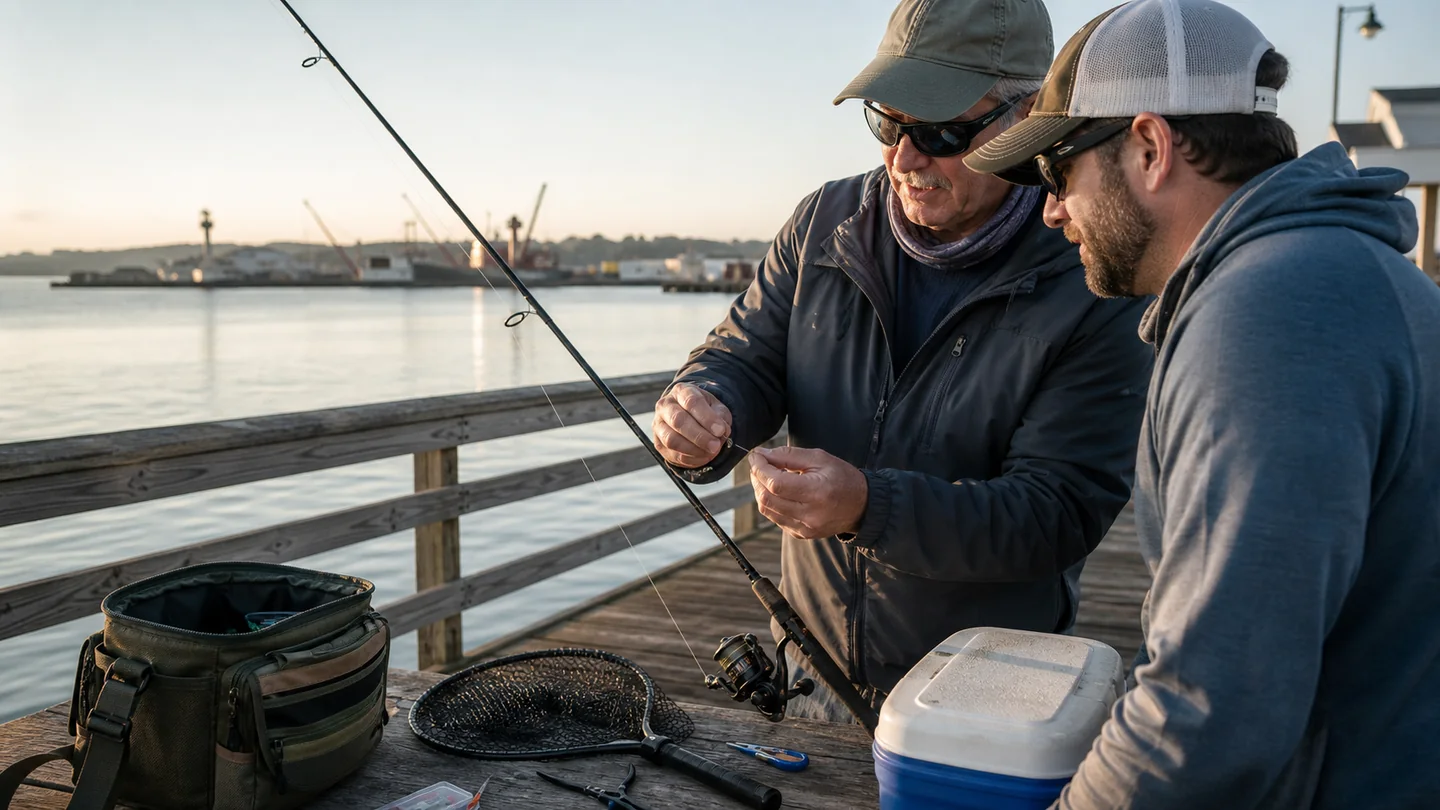
Pliers, a cutter, dehooker, legal measuring tool, landing net, wet-hand access, and cold storage or release plan affect every fish. NOAA's release guidance favors appropriate tackle, shorter fight time, prepared tools, minimal air exposure, and careful handling. None of those jobs is improved by spending the entire budget on the rod.
Match the landing tool to the height and fishery. A net held at water level is different from a pier drop net. Large offshore or toothy species may require trained handling and equipment beyond this starter comparison.
A small tackle wallet makes decisions visible
Carry two or three legal rigs, a few locally proven lures, spare leader, and enough weights for the likely current. Label packets with hook and leader details. When the whole selection fits in one wallet, it is easier to notice what was actually used and replace only what was lost.
Finish with line disposal, fresh-water care appropriate to the equipment, dry storage, and a note about failures. NOAA asks anglers to recover line and prevent fishing gear from becoming marine debris.
Original Sources
TideAhead wrote this page as an original practical summary. The factual guidance comes from the named government agencies, instructors, and experienced authors below. Follow the official agency links for current rules and complete safety instructions.
- Inshore Saltwater Fishing Gear for Beginners
Take Me Fishing · Angler Debbie Hanson's practical starter list for an inshore rod and reel, line, leader, hooks, weights, lures, pliers, and a landing net.
- Surf Fishing Tips for Beginners
Take Me Fishing · Outdoors writer Anietra Hamper's beginner lessons on local tackle advice, reading the beach, keeping rigs simple, and caring for saltwater equipment.
- Catch and Release Fishing Best Practices
NOAA Fisheries · Hooks, nets, dehooking, fish handling, air exposure, barotrauma, and release-at-depth guidance.
- What You Can Do on the Water
NOAA Marine Debris Program · Responsible disposal and recycling of fishing line and other fishing gear.
- State Recreational Fishing Websites
NOAA Fisheries · Official state and territorial links for current recreational fishing rules and licenses.