Crab Rings, Collapsible Traps, and Pots
Compare three common recreational crabbing tools by access, attention, soak style, line handling, and region-specific gear rules.
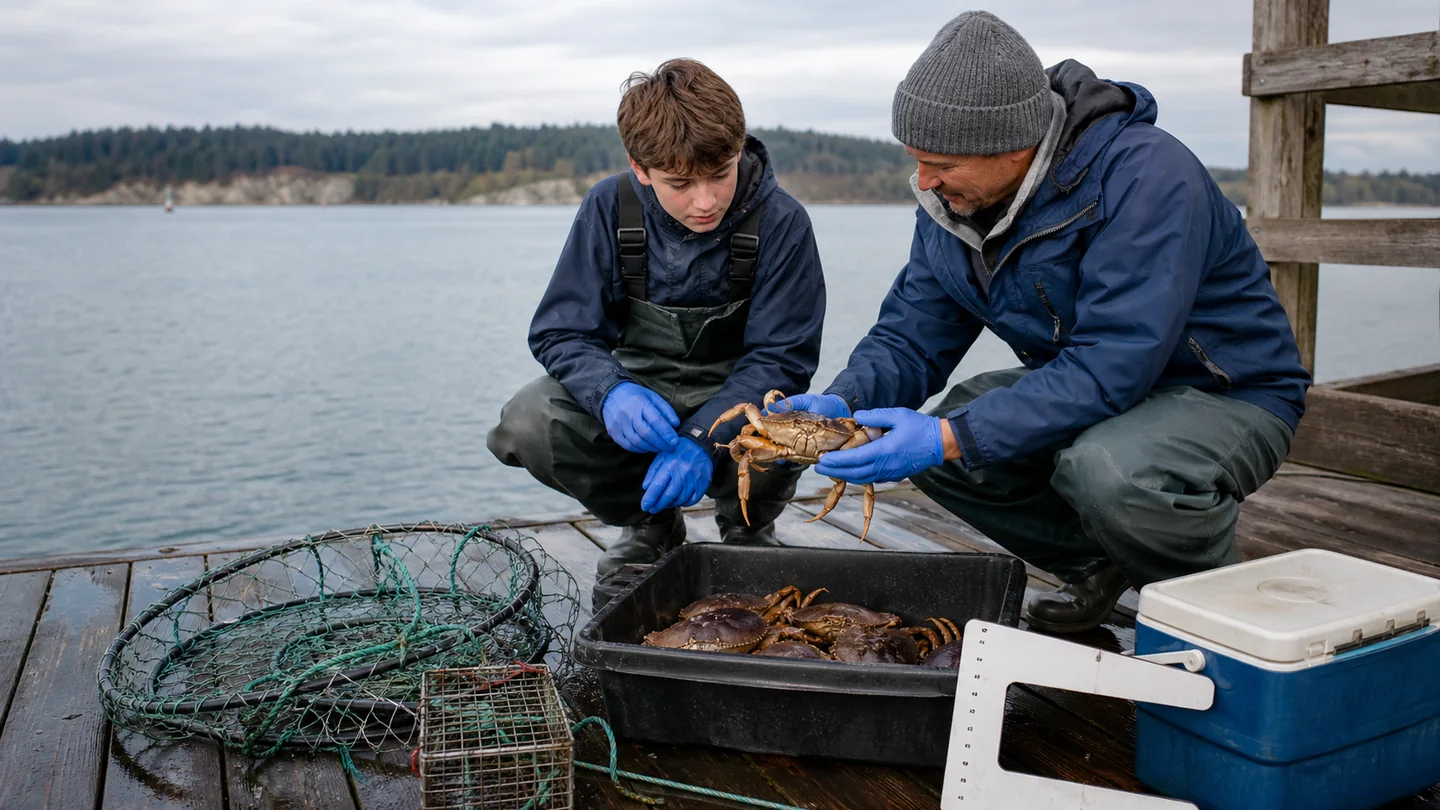
What We Can Honestly Compare
This page compares documented designs, rules, and operating demands. We did not test individual products, so there are no invented field results or brand rankings here.
Common Recreational Crab Gear
Decision
For a first lawful pier session, rent or borrow the locally common ring or collapsible trap. Choose an enclosed pot only after learning the area's rigging rules, depth and current, vessel workflow, and safe recovery method.
The law defines the product category
A store label is not proof that gear is lawful in the water ahead. State agencies may define maximum dimensions, mesh, entrances, escape rings, degradable cord, buoy color and marking, line type, pot count, and unattended-gear rules. Maryland can add turtle-reduction requirements to certain recreational crab pots; Washington has its own detailed escape and marking system.
Check the official area rule before purchase and again before use. A modification that improves storage or retention can also make otherwise familiar gear illegal.
Choose the retrieval before choosing the trap
A person lifting from a high railing needs a different weight and line plan than a crew retrieving over a low gunwale. Inspect the full load path: frame, bridle, clips, knots, line, gloves, davit or puller where used, deck landing area, and handler stance.
ODFW's field guide emphasizes a consistent lift for rings and prompt sorting. WDFW emphasizes sound gear, legal rigging, safe location, and measurement. Those practical jobs—not the number of entrances in an advertisement—should drive the choice.
Price is incomplete without loss prevention
Budget for lawful sinking or weighted line, the right amount of scope, visible and marked buoys, replacement degradable cord, spare clips, gloves, gauge, bait container, and a position record. Cheap line that floats into traffic or abrades through is expensive to wildlife and other boaters.
No TideAhead claim here comes from hands-on trap testing. We compare the basic mechanics described by fisheries agencies; local crabbers, rental docks, tackle shops, and current rules should settle the exact size and design.
Original Sources
TideAhead wrote this page as an original practical summary. The factual guidance comes from the named government agencies, instructors, and experienced authors below. Follow the official agency links for current rules and complete safety instructions.
- How to Crab
Oregon Department of Fish and Wildlife · A field-oriented Oregon guide to baiting, setting, retrieving, sorting, measuring, handling, and chilling crab; rules and timing examples are Oregon-specific.
- Coastal Crabbing Guide
Washington Department of Fish and Wildlife · Washington guidance on crab gear, public access, pot setup, buoy and line management, measuring, and legal release.
- Crab Seasons and Areas
Washington Department of Fish and Wildlife · Current Washington openings, reporting, gear rules, and species-specific retention requirements; check again on the day of a trip.
- Blue Crab
Maryland Department of Natural Resources · Chesapeake-oriented biology and recreational methods including hand lines, rings, traps, trotlines, and dip nets.
- Statewide Shellfish and Seaweed Gear Rules
Washington Department of Fish and Wildlife · Current Washington requirements for shrimp and crab pots, buoys, line, escape mechanisms, and gear limits.