Build a Day-Boat Kit in Three Layers
Separate legal carriage gear, daily boat-handling equipment, and route-specific communications so an attractive accessory never hides a missing essential.
What We Can Honestly Compare
This page compares documented designs, rules, and operating demands. We did not test individual products, so there are no invented field results or brand rankings here.
Three Layers That Work Together
Decision
Complete the required-carriage audit first, then outfit the boat for repeatable docking and minor failures, then add communications and survival layers for the route. Recheck fit, expiration, charge, registration, and crew familiarity instead of treating the shopping trip as completion.
Start with the boat's facts, not a retailer checklist
The Coast Guard's federal guide organizes requirements by vessel and use. State law, local rules, children aboard, towing sports, night operation, and regulated waters can add obligations. Write down the boat length, propulsion, waters, passenger profile, and usual operation before building the list.
Approval labels, fit, accessibility, condition, expiration, and quantity all matter. An inflatable life jacket needs its model-specific inspection and rearming routine; a flare hidden beyond its date is not restored by sitting beside a new chartplotter.
Buy line by job and inspect the whole path
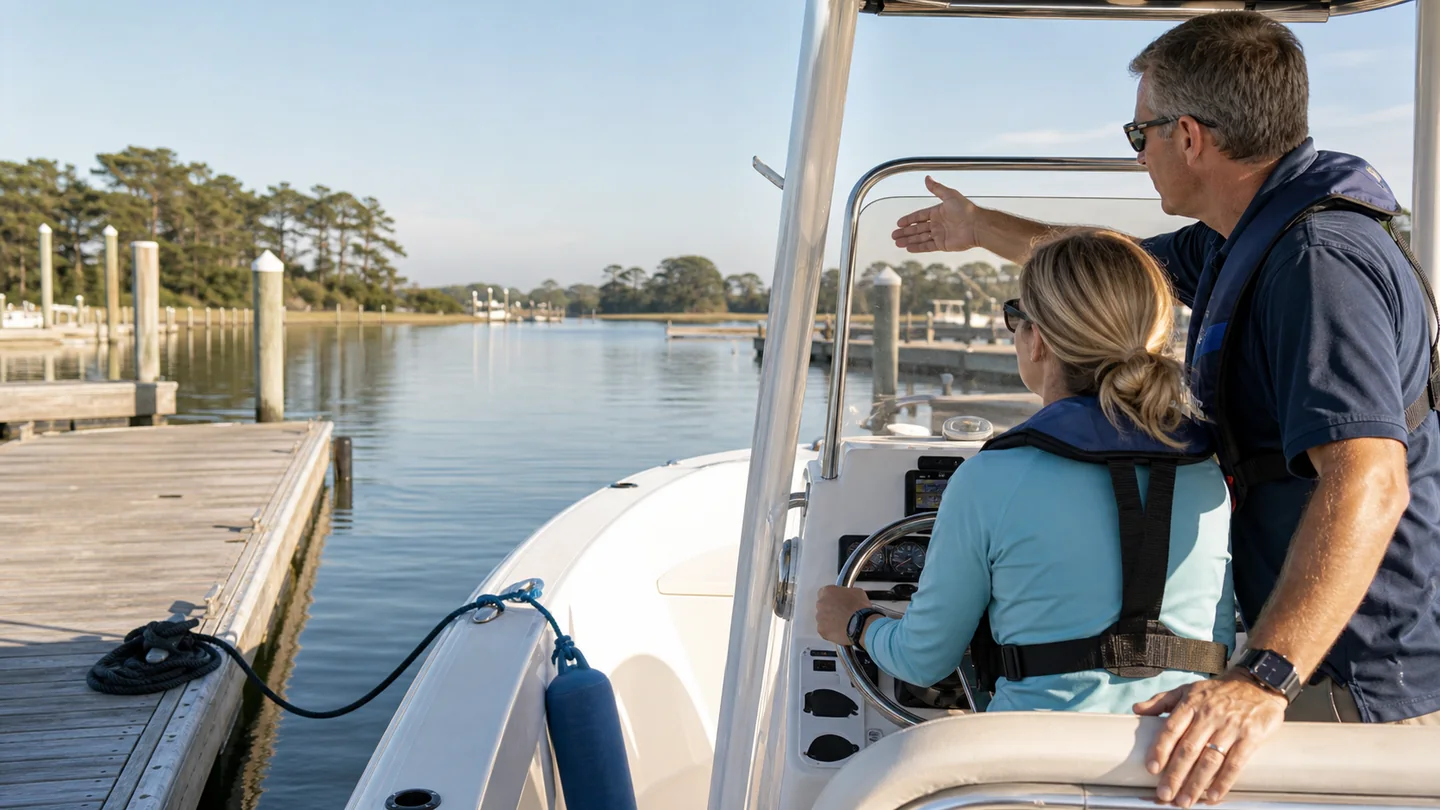
BoatUS distinguishes the jobs of bow, stern, breast, and spring lines. Equip the boat with dedicated lines of suitable diameter and length, protect them from chafe, and practice the actual cleats. Fenders must sit where this hull meets this dock—not where a catalog photograph placed them.
Do the same with communications. The Coast Guard describes VHF as line-of-sight, so antenna position and installation matter. DSC relies on a correctly programmed identity and position source. A radio check and crew drill reveal more than an unopened box.
Inspection is part of ownership
Create monthly, seasonal, and pre-departure checks for batteries, lights, alarms, hoses, bilge systems, lines, signals, extinguishers, first-aid supplies, and registered distress equipment. Use manufacturer instructions for the exact product and Coast Guard recall resources when appropriate.
TideAhead has not conducted laboratory, range, waterproofing, or durability tests on this equipment. This guide organizes official requirements and published seamanship guidance so owners can ask better questions; it does not certify a boat or replace an inspection by a qualified professional.
Original Sources
TideAhead wrote this page as an original practical summary. The factual guidance comes from the named government agencies, instructors, and experienced authors below. Follow the official agency links for current rules and complete safety instructions.
- A Boater's Guide to the Federal Requirements for Recreational Boats
U.S. Coast Guard · Federal carriage requirements and safety guidance for recreational boats.
- Life Jacket Wear and Fit
U.S. Coast Guard · Approval, sizing, fit, accessibility, and serviceability of wearable and inflatable flotation devices.
- Radio Information for Boaters
U.S. Coast Guard Navigation Center · VHF Channel 16, distress procedure, radio checks, and the practical range of marine VHF.
- Digital Selective Calling Distress Alerts
U.S. Coast Guard Navigation Center · How DSC distress alerts use identity and position information and how to cancel an accidental alert.
- Float Plan
U.S. Coast Guard · What a float plan is, who should prepare one, and why vessel details matter in an emergency.
- Docklines
BoatUS · BoatUS Editors explain line roles, useful lengths, chafe, material, and why a tidy dedicated set makes docking easier.
- First-Time Boat Owner's Checklist
Discover Boating · An ownership checklist covering education, insurance, trailering, maintenance, storage, gear, and on-water practice.